

Remoteness ● ● ● Comfort ● ◌ ◌ Physical challenge ● ● ◌
A 9-Day Practical Field Programme in the Remote Tian Shan Mountains
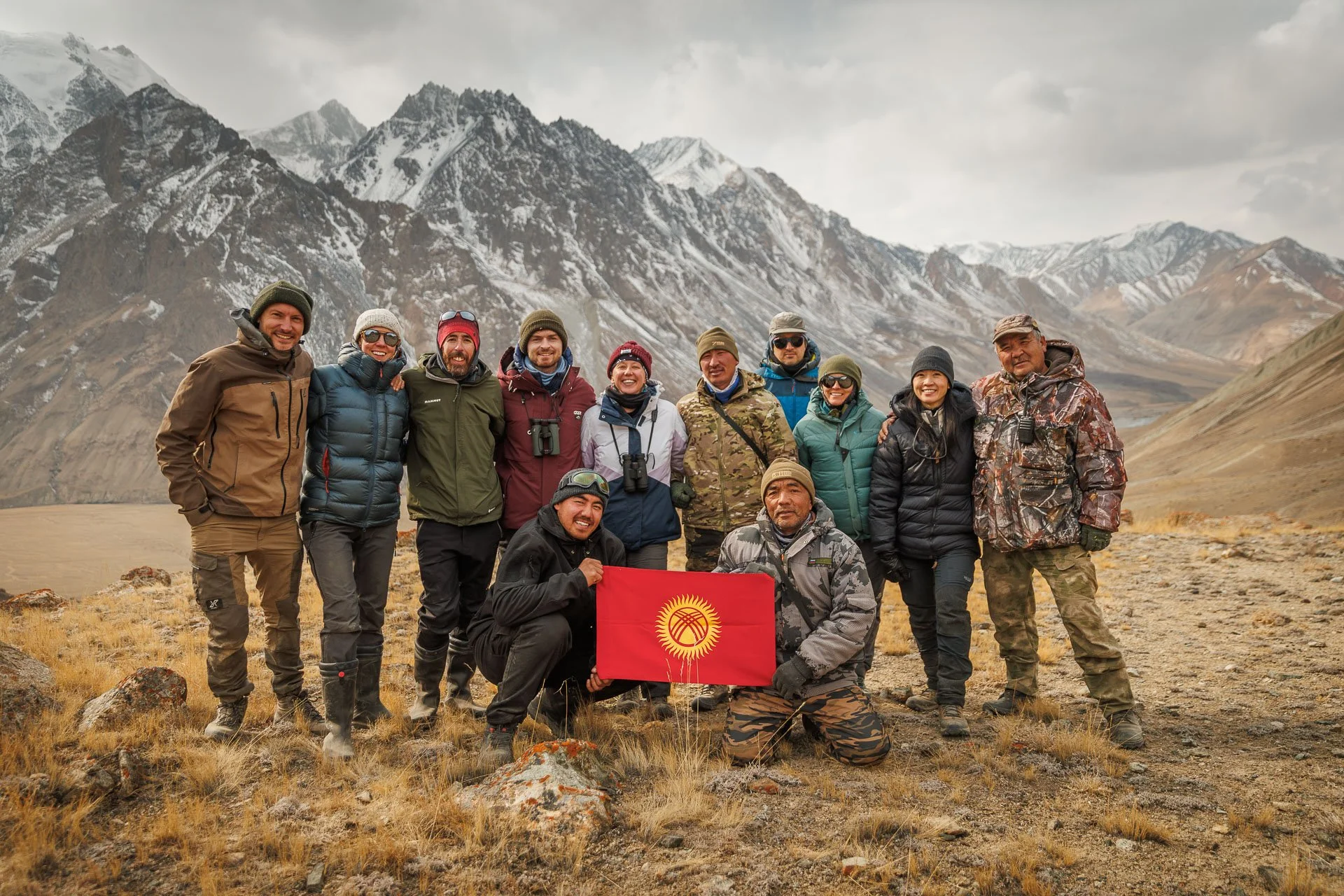
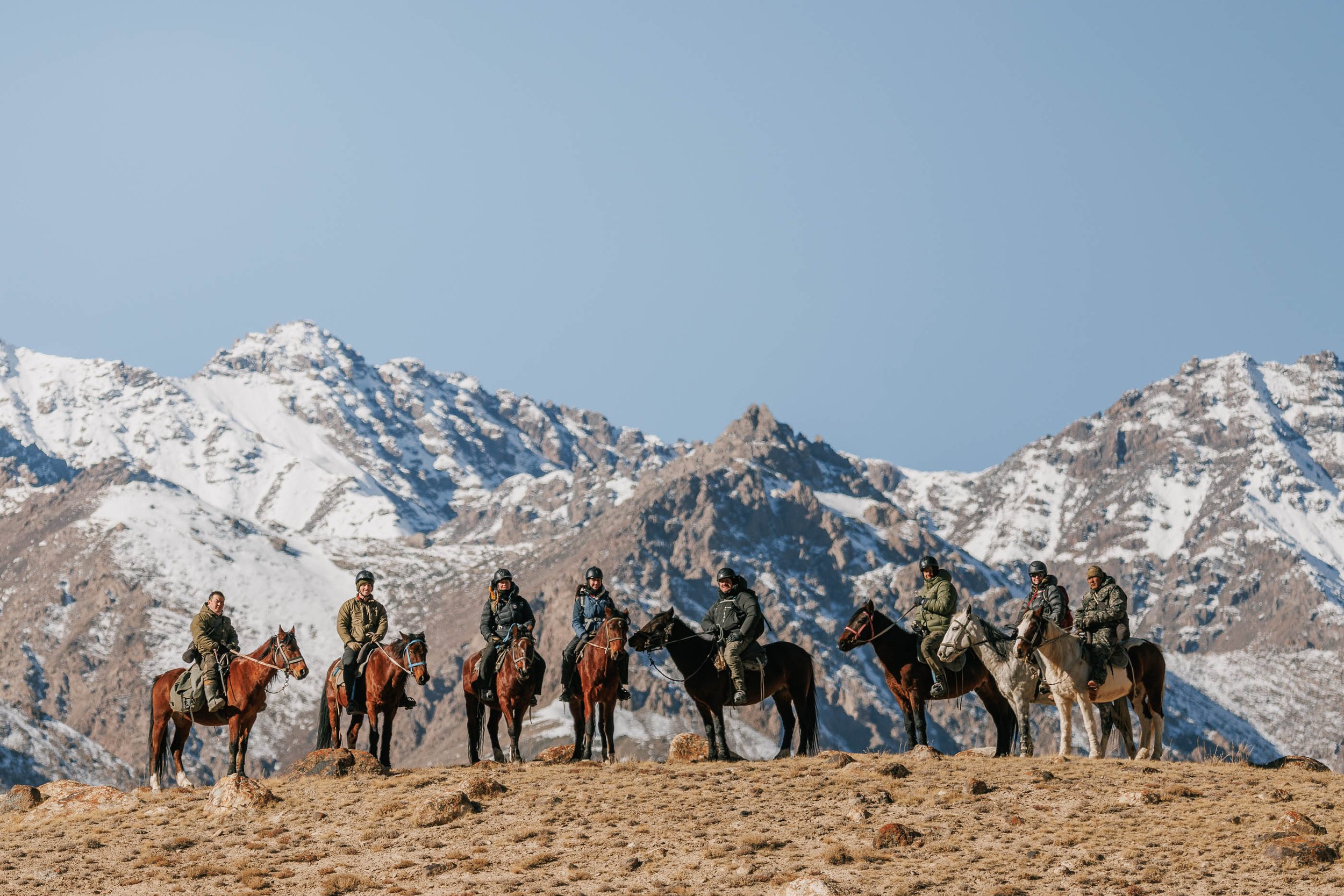
Join a 10-person field team to establish a brand-new snow leopard monitoring grid. Operating in alignment with the global GSLEP framework, this training placement is designed specifically for students, graduates and career-switchers who want exposure to alpine wildlife research.
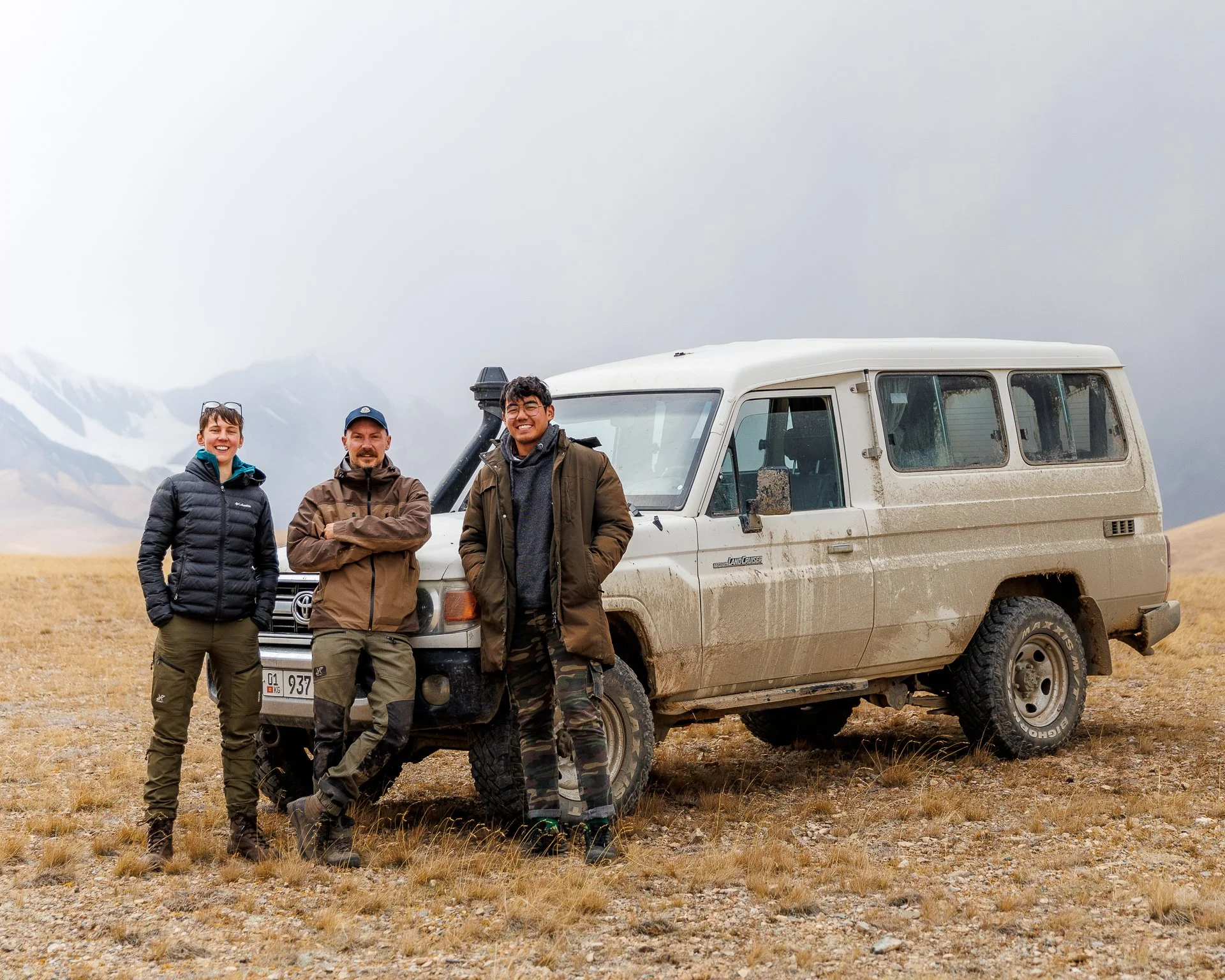
This is a cooperative field placement where you will operate as an active member of the research crew. Working alongside our expedition leaders, you will learn how to deploy camera traps across precise, pre-mapped mountain locations, practice non-invasive tracking methods, conduct abundance and distribution surveys, as well as learn the basics of expedition and camp logistics. Split into focused teams of five, you will be part of our ongoing data collection push in the region, influencing future policy and research design. Conditions will be basic: you will be sleeping in tents and are expected to support day-to-day camp tasks such as cooking, cleaning and general management tasks.
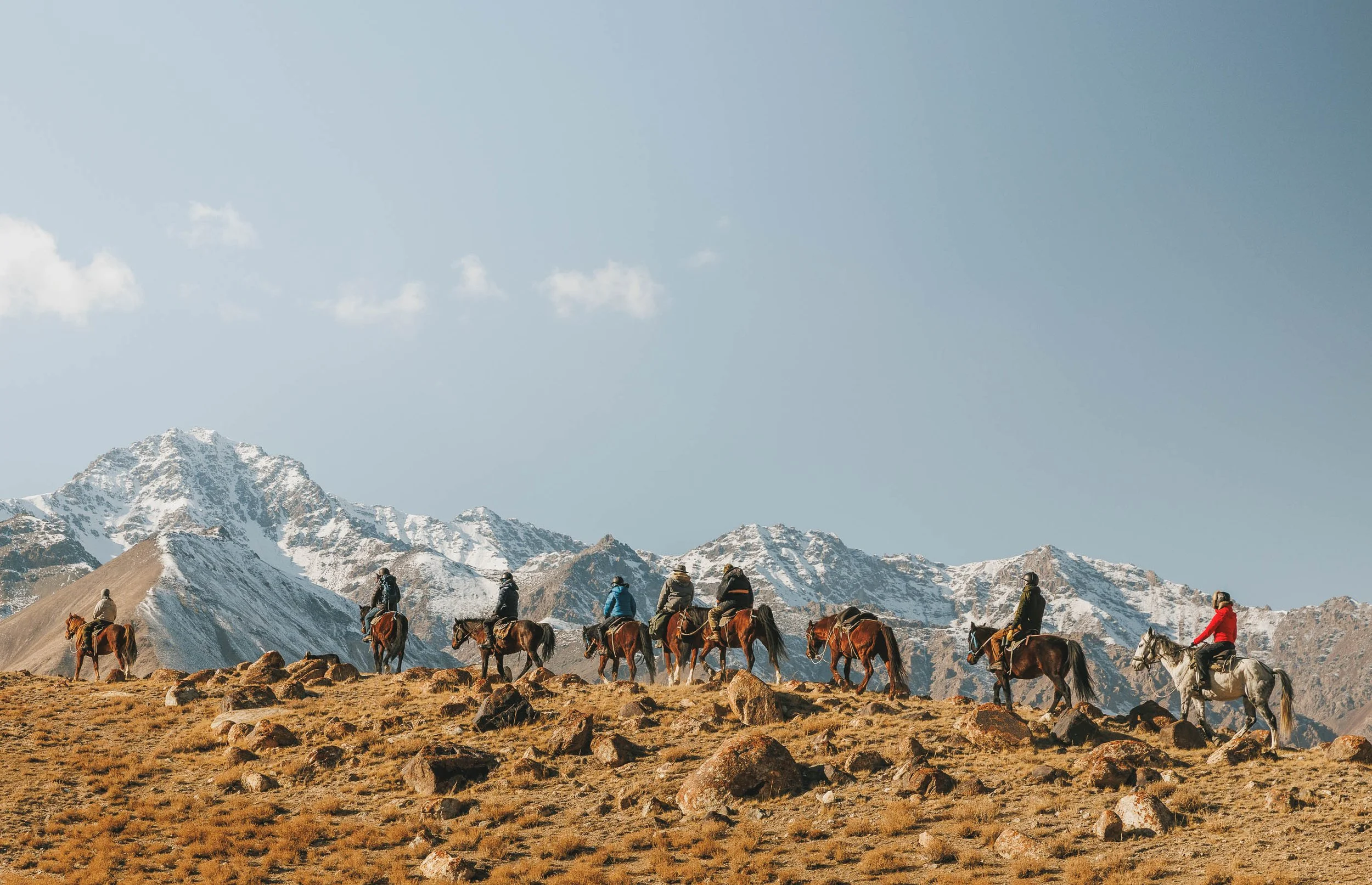
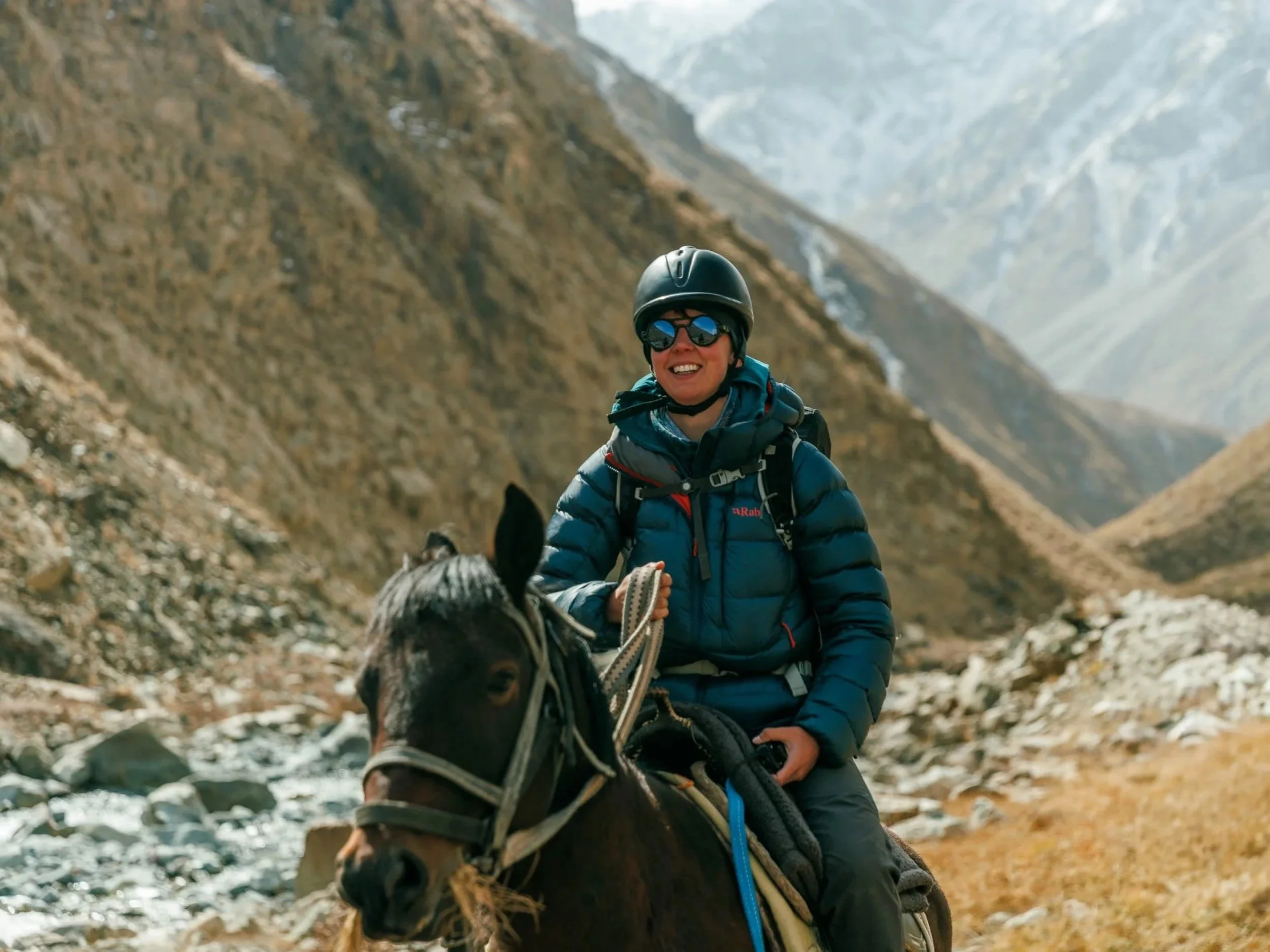
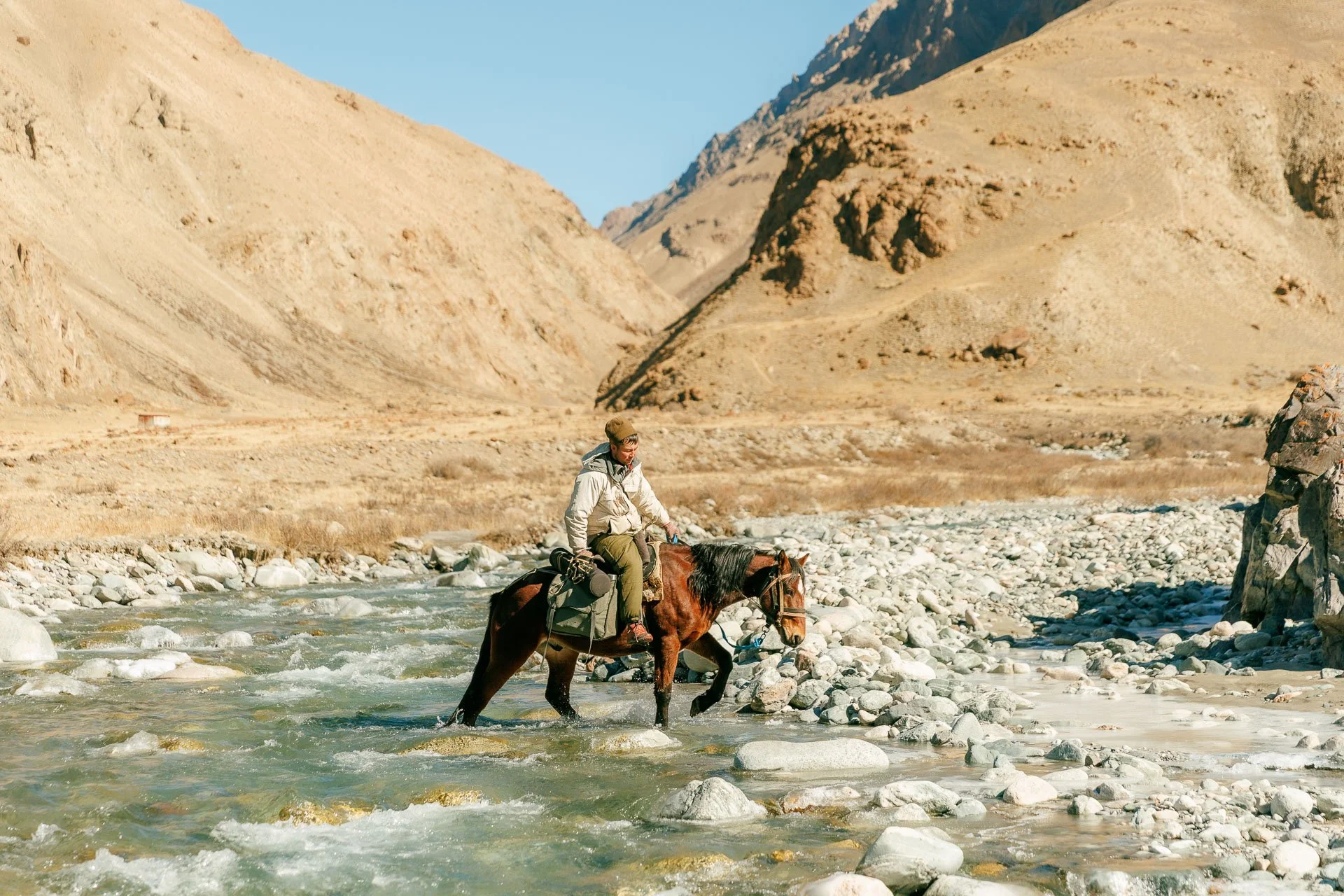
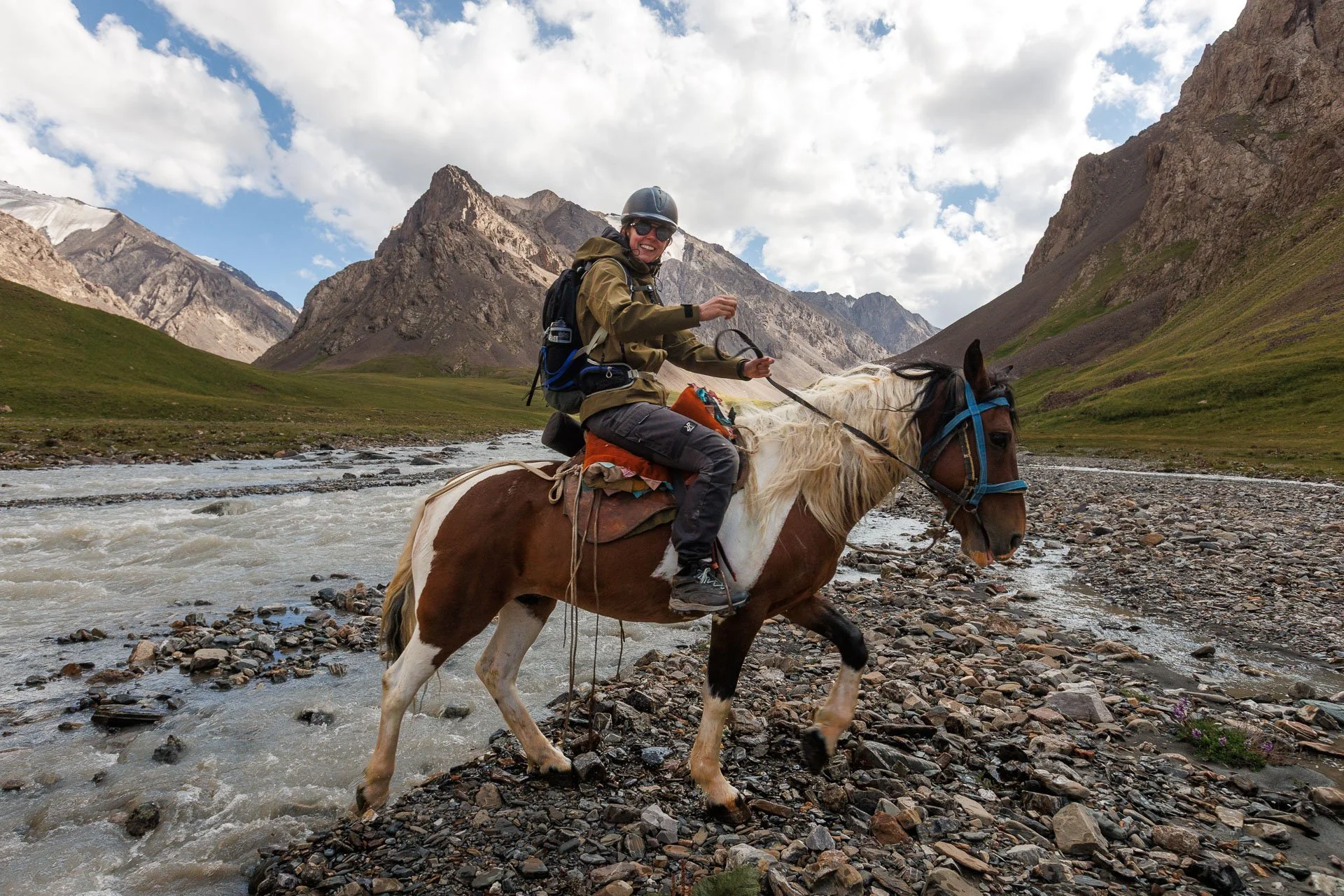
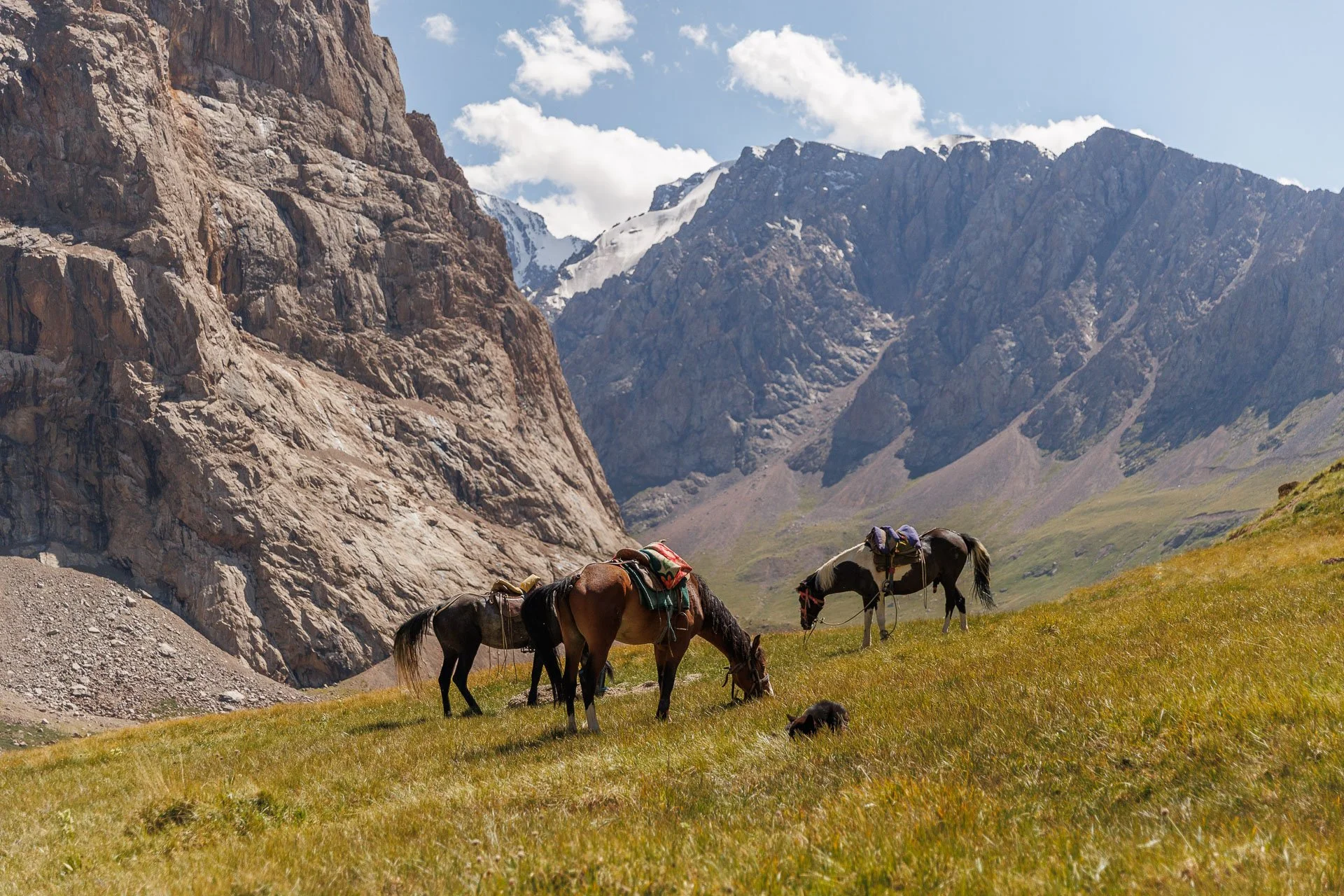
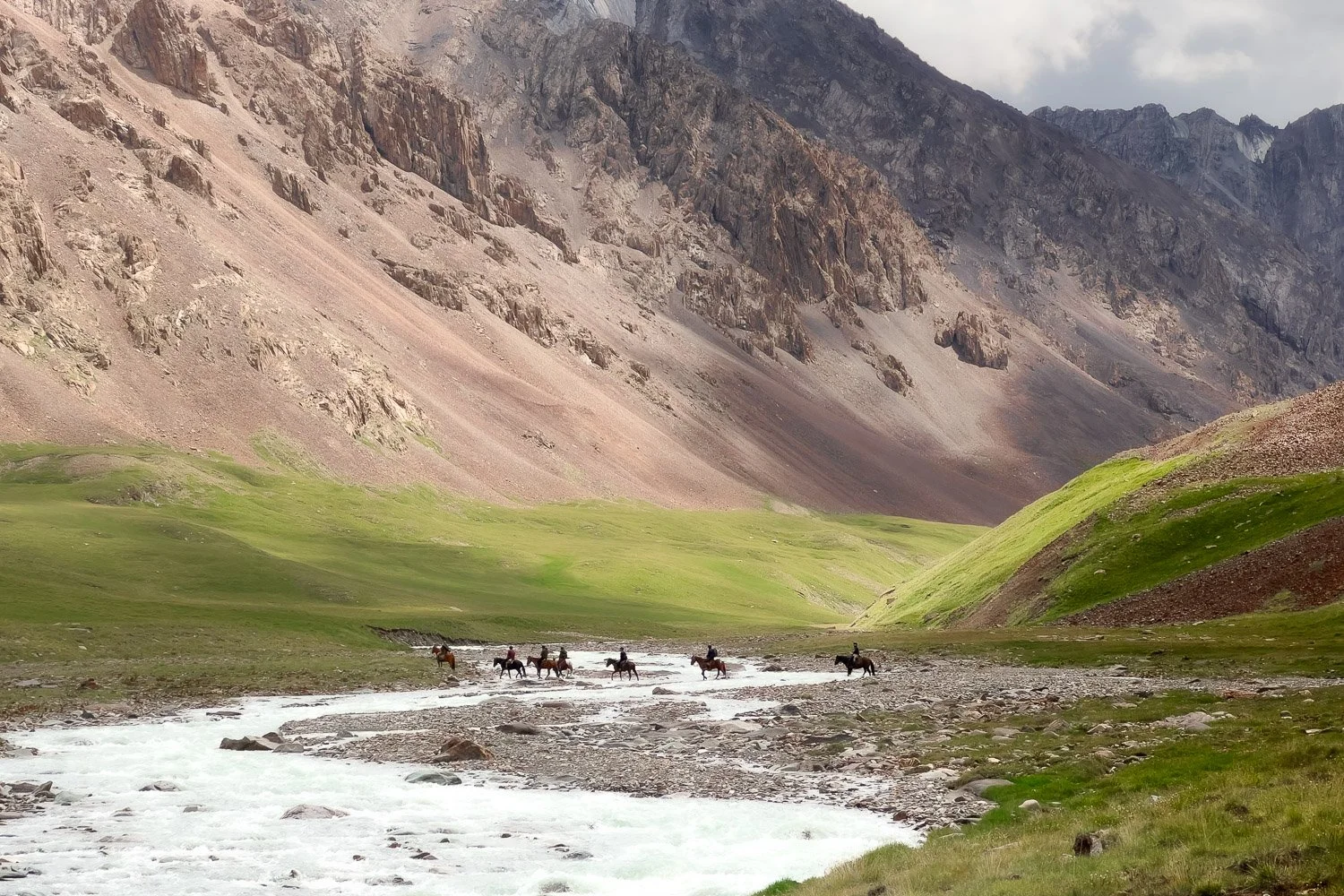
From carrying essential field equipment on mountain ponies to negotiating challenging mountain passes by 4×4, you will play vital role on this expedition.
We aim to expose you to multiple conservation methods to produce a data set that will have long-term value and impact, giving you a more complete understanding of what it takes to conserve mountain environments.
Placements are heavily subsidised by Wild Expeditions with the expectation that applicants can demonstrate a desire to work in the field of conservation and develop relevant field skills.
No Previous Experience Required
This expedition is intentionally designed for students, graduates and career-switchers who want field exposure to further their knowledge, experience and career prospects.
No prior field or riding experience is required, but a baseline of physical fitness to ride, hike and camp in mountainous terrain is essential. As is a passion for conservation and wildlife.
Step-by-Step Field Training: We provide full, hands-on training covering every piece of hardware, tracking methodology, and safety protocol on the expedition, providing you with a broad-spectrum of skills and experience.
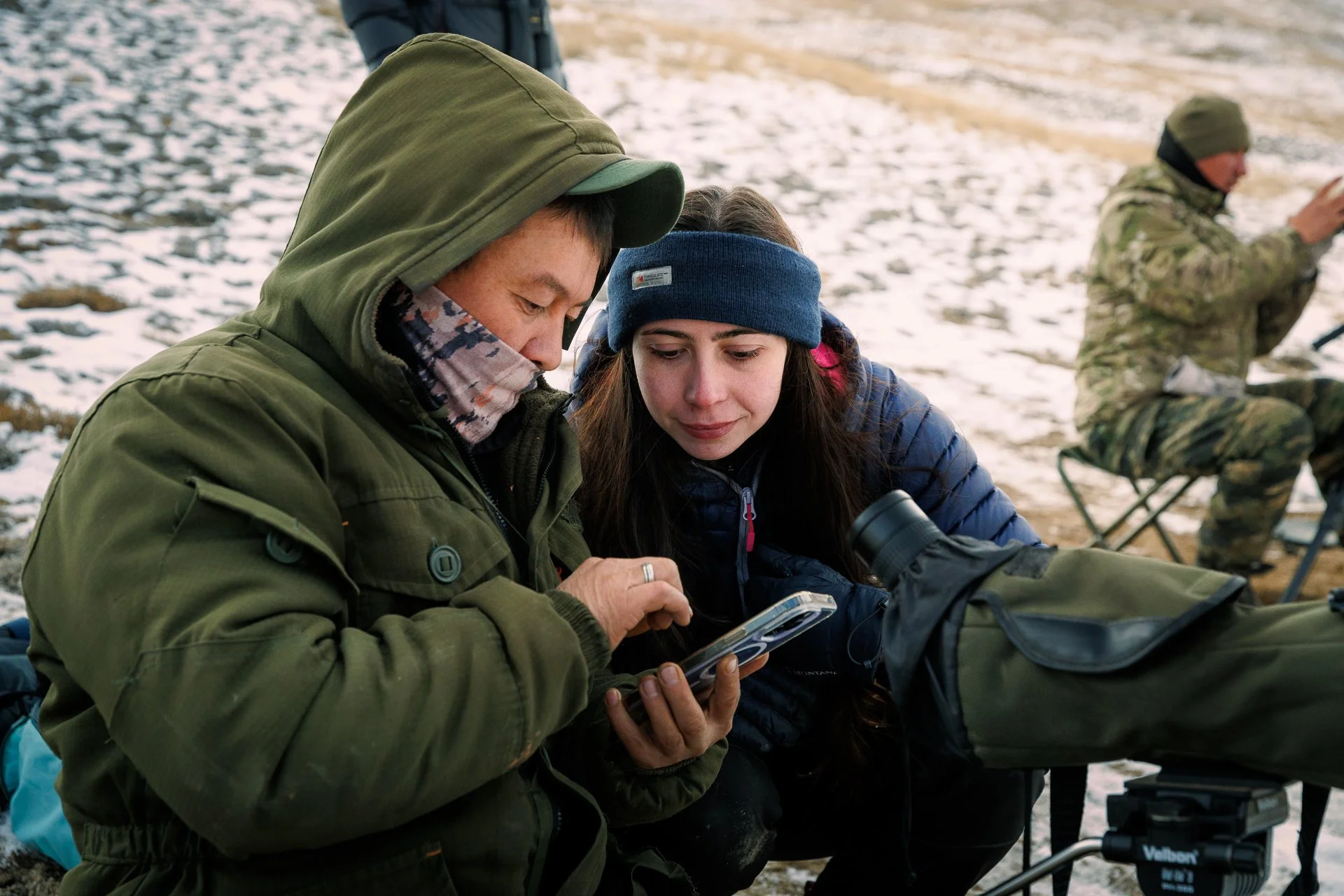
Structured 5-Person Teams: You will work in small, supportive field units alongside seasoned local rangers and expedition leaders. You are never left to guess—every deployment is a collaborative, expert-guided effort.
Accessible Science: We break down complex international monitoring protocols into clear, actionable daily field steps. If you have the motivation and passion to help protect mountain wildlife, we will teach you the rest.
Core Skills & Methodologies
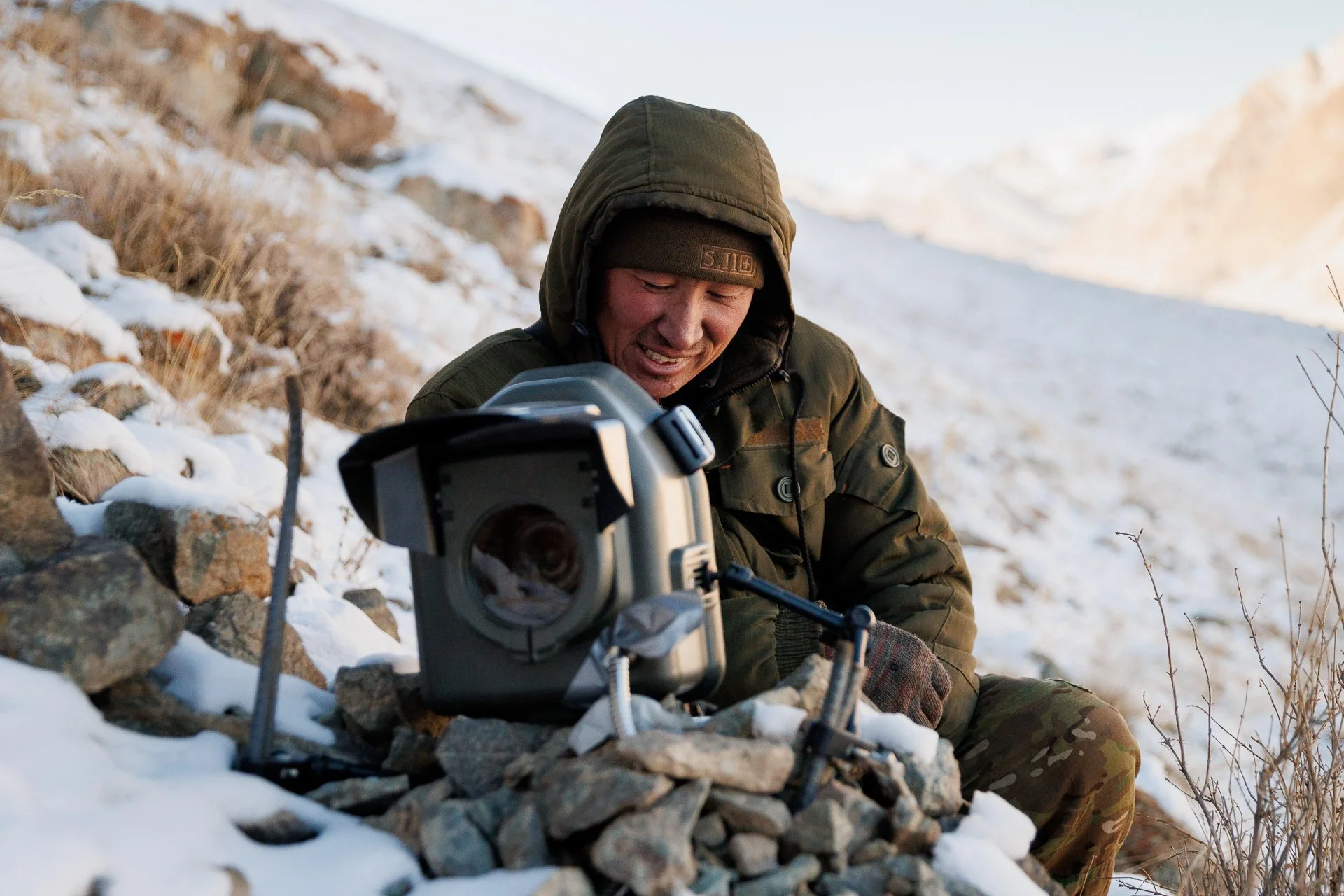
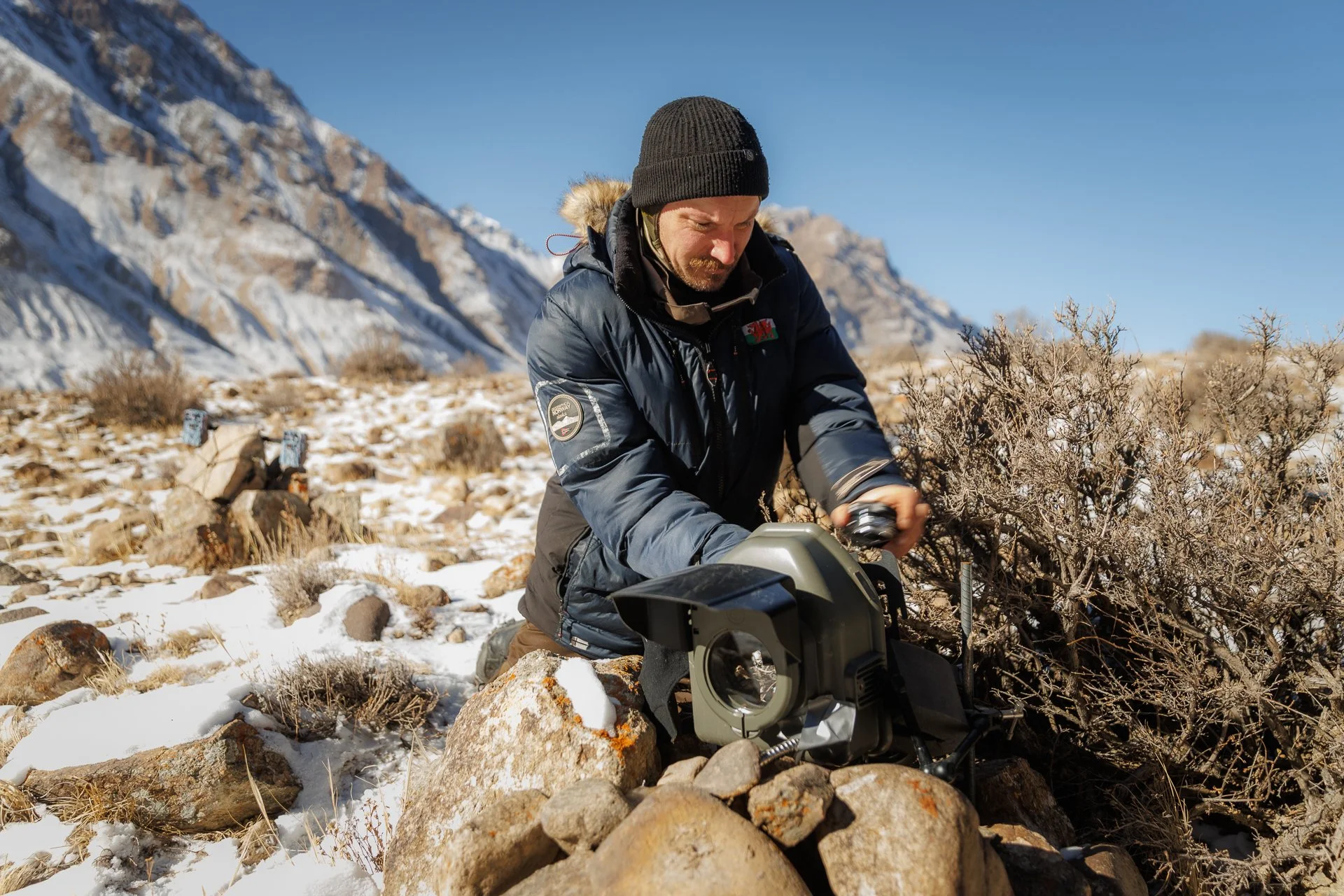
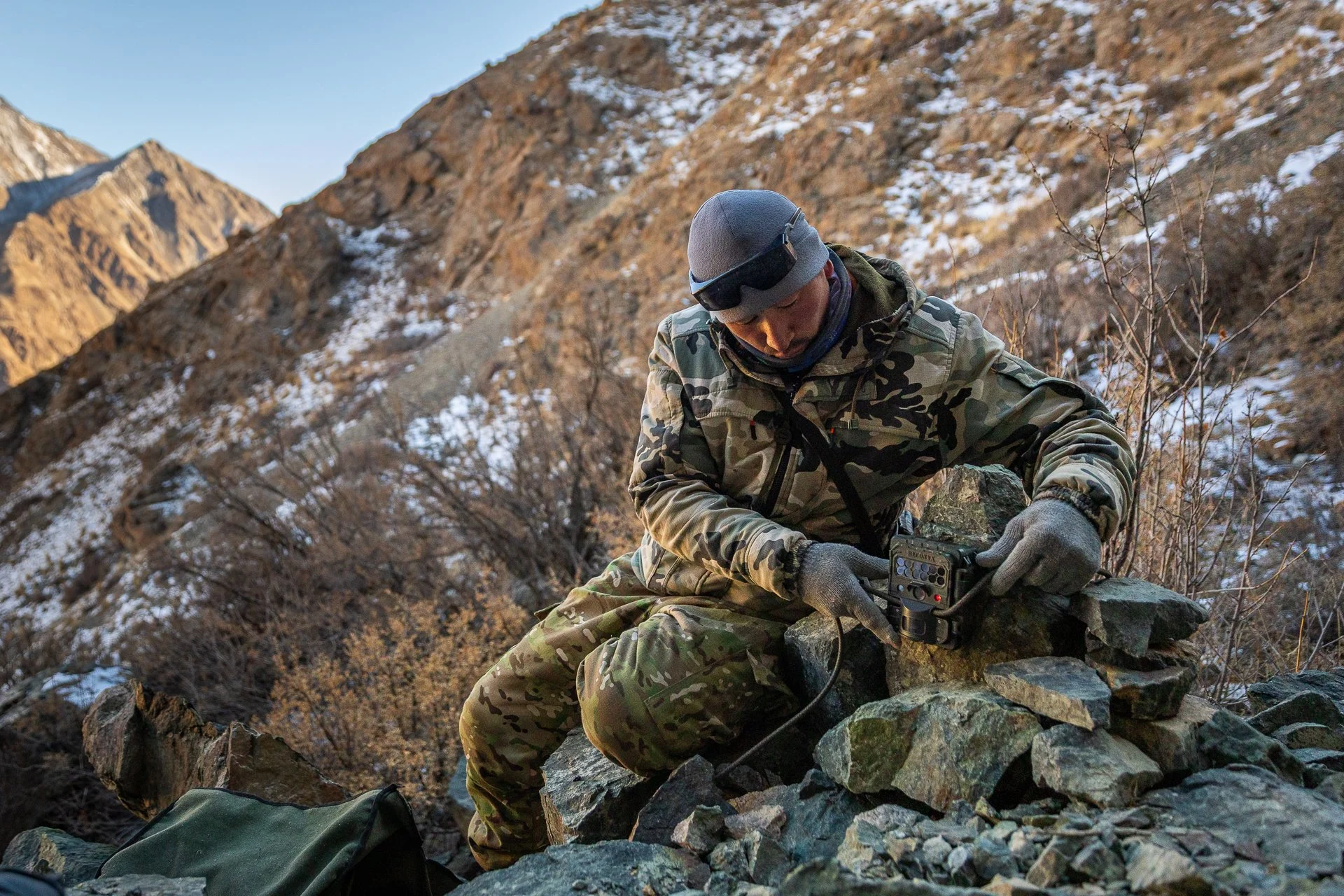
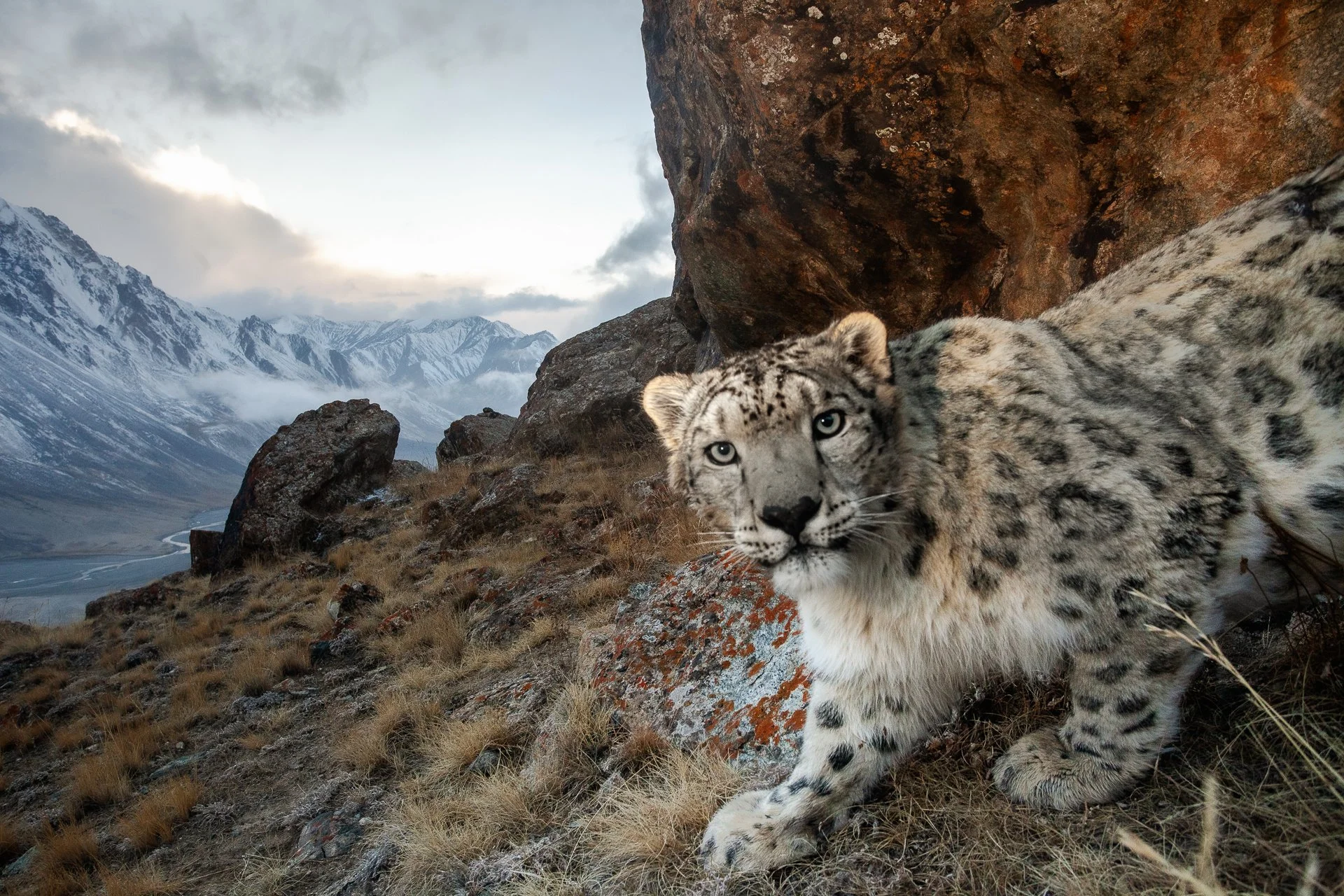
Camera Trap Installation: Learn about remote wildlife monitoring. You will be trained to program, calibrate, and install camera traps to strict scientific specifications, optimised to capture mountain predators, such as wolves, bears and snow leopards.
Secondary Field Skills: Learn to read the landscape for wildlife. Along our deployment routes, teams will practice non-invasive tracking and log-sign identification (scrapes, scat, scent marks).
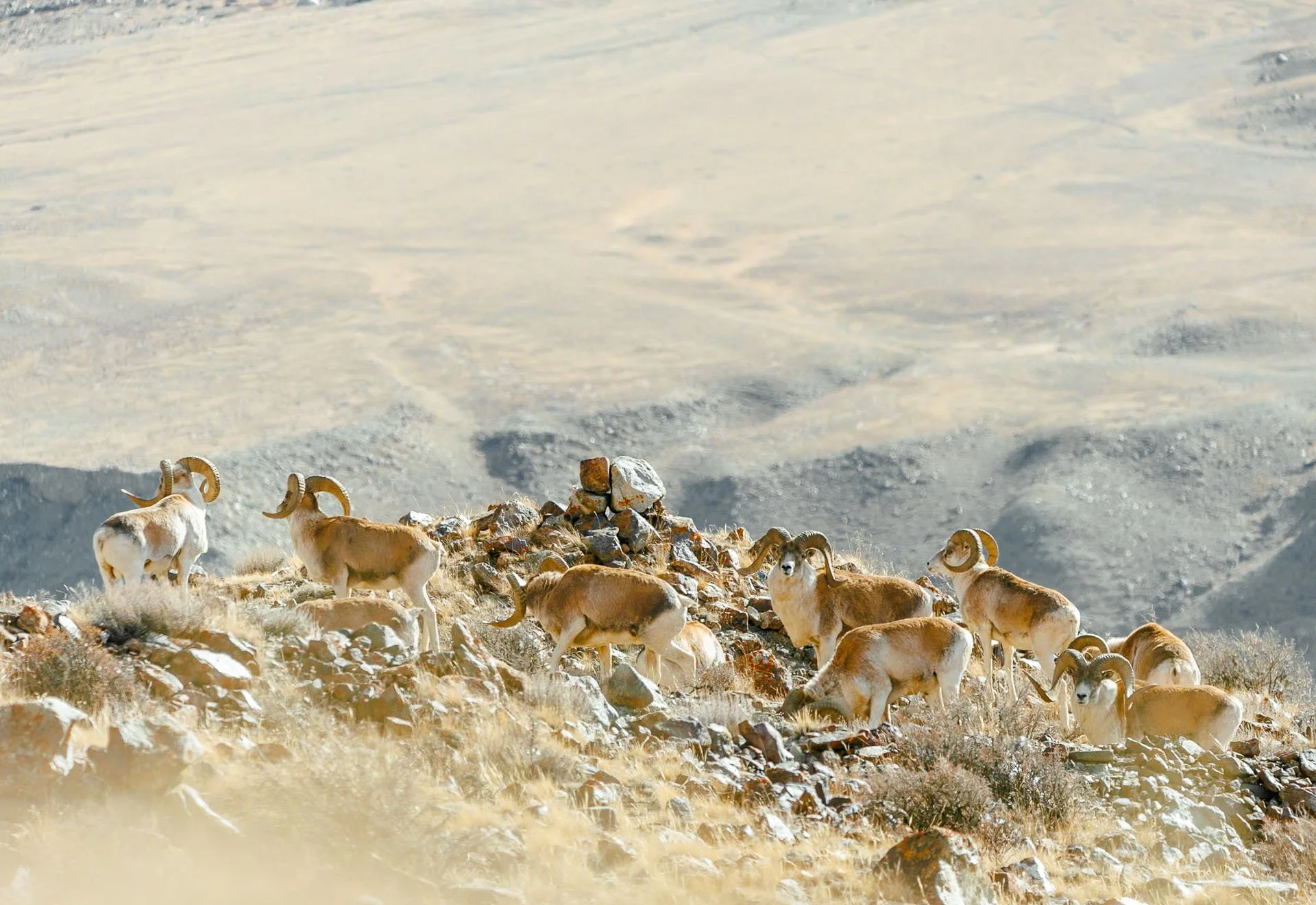
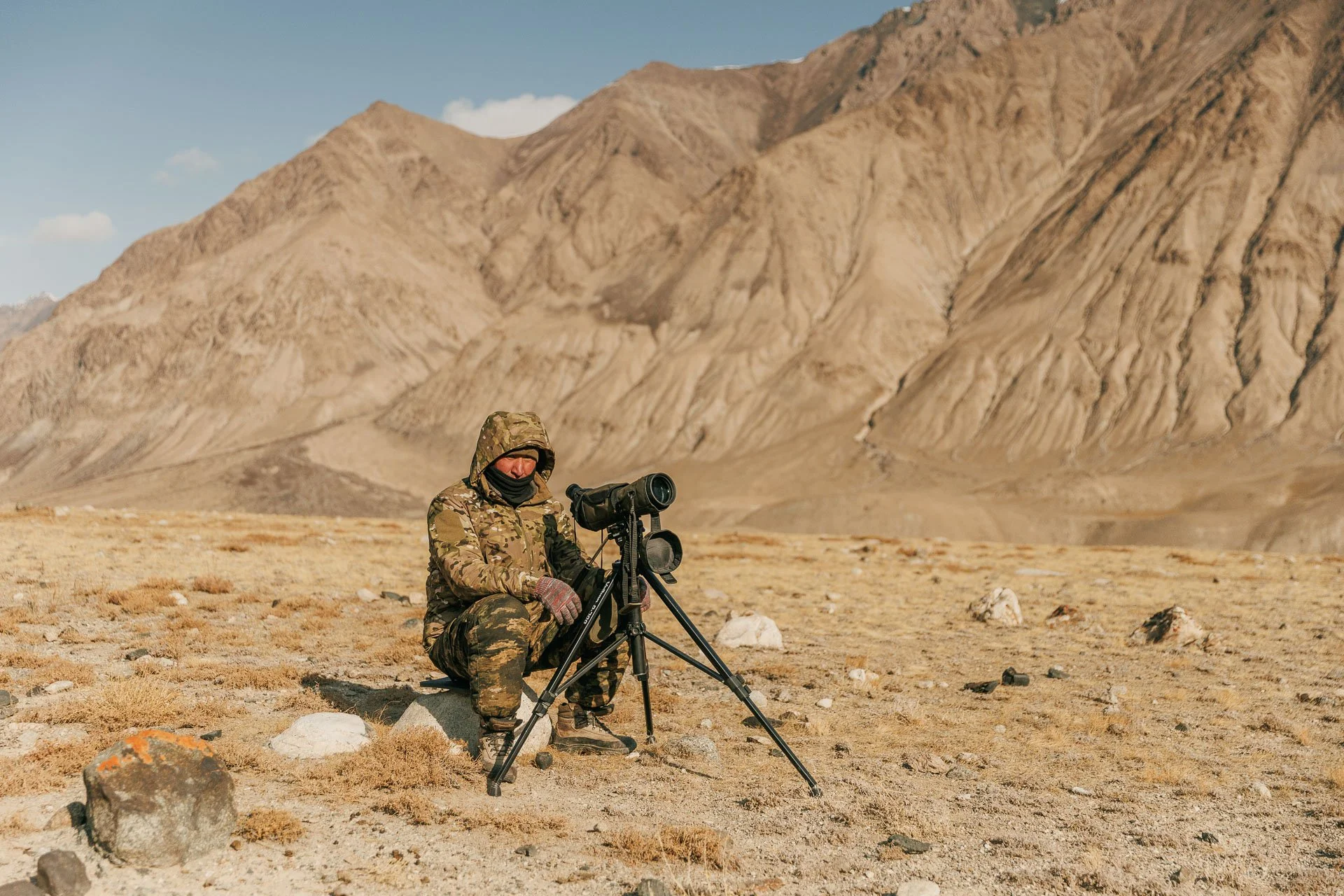
High-Powered Optics Surveys: Utilise professional spotting scopes and binoculars to safely run abundance counts and wildlife distribution surveys of key prey species, including Central Asian Ibex and Argali. With luck we may spot some of the regions predators: bears, wolves and the elusive snow leopard.
Expedition Logistics: Learn to operate safely in mountainous terrain. You’ll cover expedition safety, planning, horse riding skills, wild camping and more.
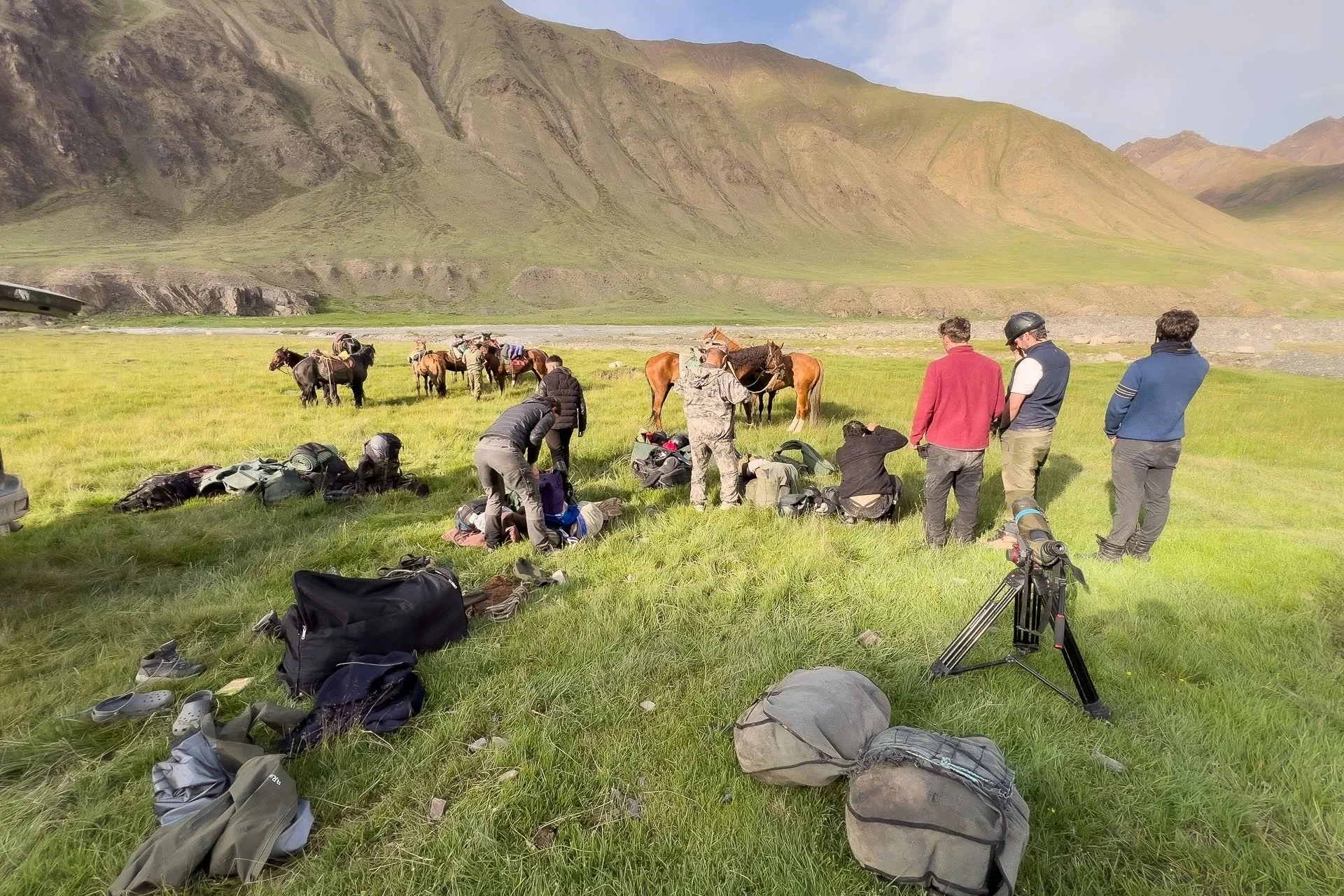
Camp Operations: Gain practical insight into running a remote, off-grid scientific base camp. As a cooperative crew member, you will assist with daily camp operations, from cooking and gear maintenance to team task rotation alongside local rangers.
Itinerary
Live side-by-side with local experts and learn about mountain conservation in our off-grid base camp.
Day 01
Arrivals & Briefing
Arrive in Bishkek (airport transfers provided) and check into your hotel. Meet the cohort for an evening dinner and learn more about the week ahead. To protect the security of the project and mitigate poaching risks, the exact location of the grid remains restricted until this point.
Day 02
To the foothills
Leave the bustle of Bishkek behind as we drive along the southern shore of Lake Issyk-Kul. We’ll stop to explore the red-rock sculptures of Fairy Tale Canyon and grab a local lunch before arriving at our hotel in the foothills of the Tian Shan mountain range. This quiet, authentic town is the perfect staging point—a chance to breathe the mountain air and prepare for the off-road adventure ahead. Accommodation is in a basic, but comfortable Kyrgyz-owned hotel along the shores of Issyk-Kul.
Day 03
Into the wilderness
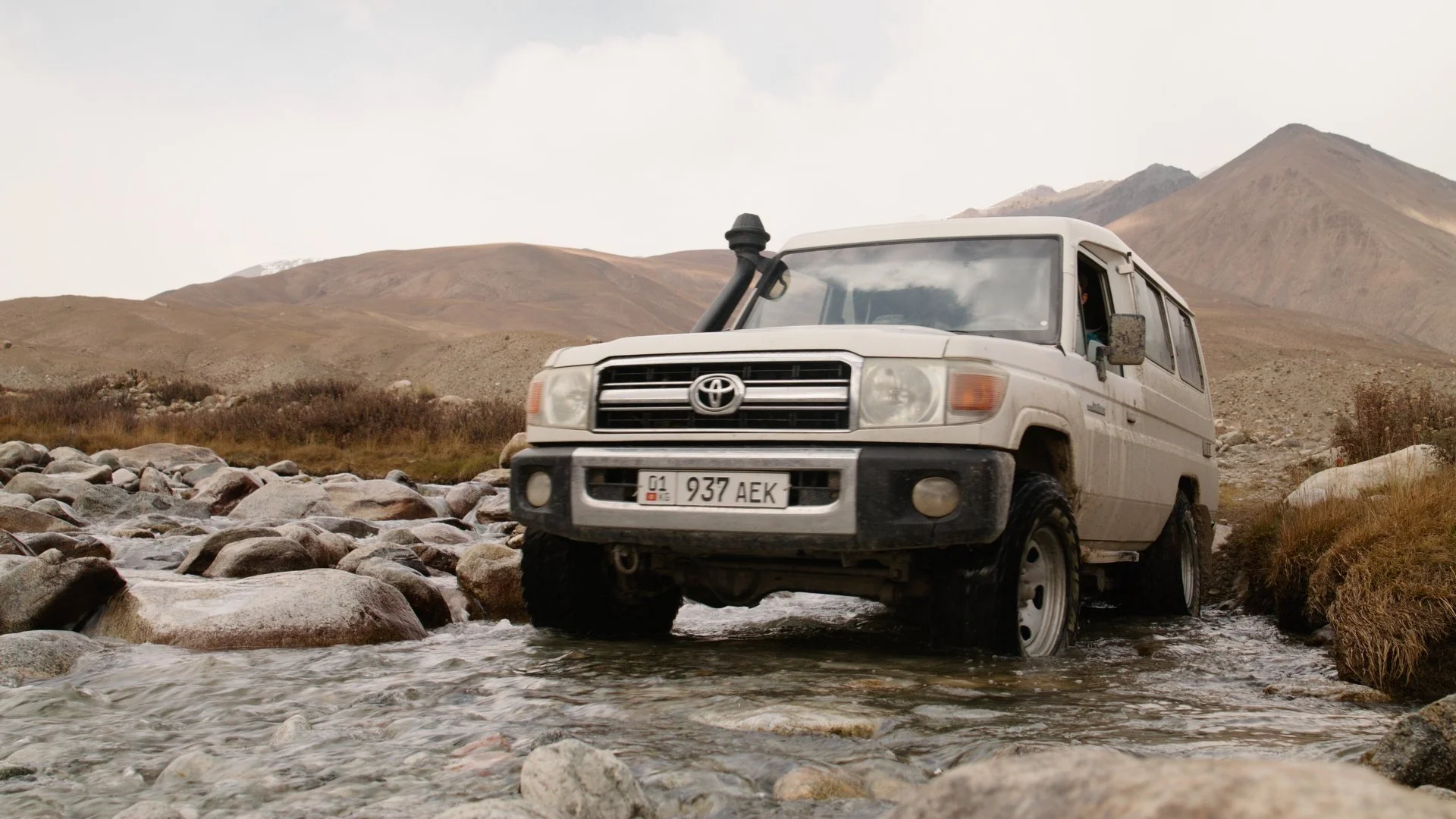
Today we’ll travel deep into the Tian-Shan range by 4x4, meandering through ancient glacial valleys and over 4,000m mountain passes. We’ll negotiate river crossings and cool alpine temperatures along the way to reach our campsite deep in the Tian Shan.
After arriving at our isolated base camp you’ll settle into your new home, meet your local ranger team and begin camp setup tasks. You will immediately begin work learning about conservation in the area, get to grips with high-powered scoping equipment, and familiarise yourself with equipment and techniques we’ll be using throughout the week.
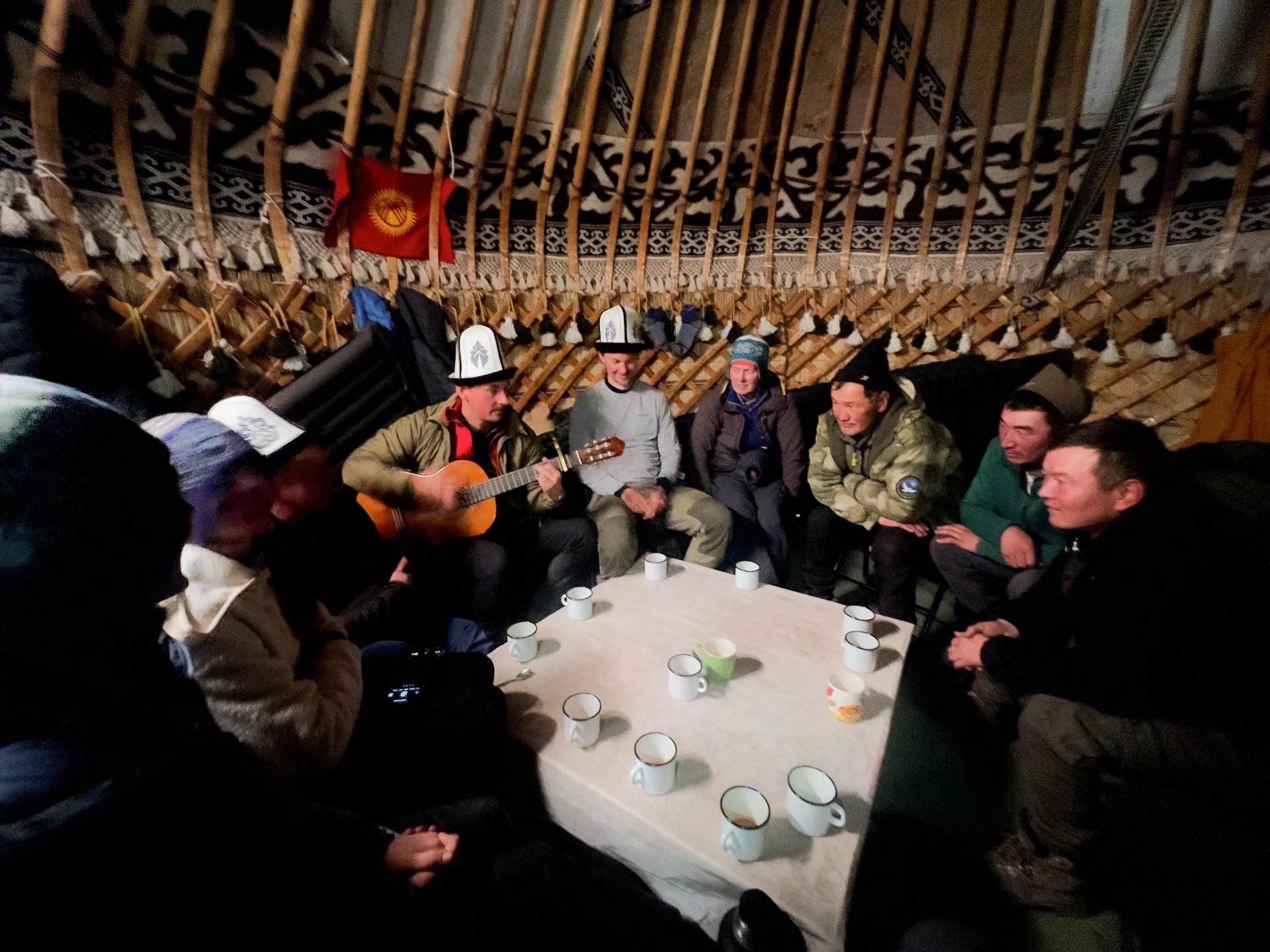
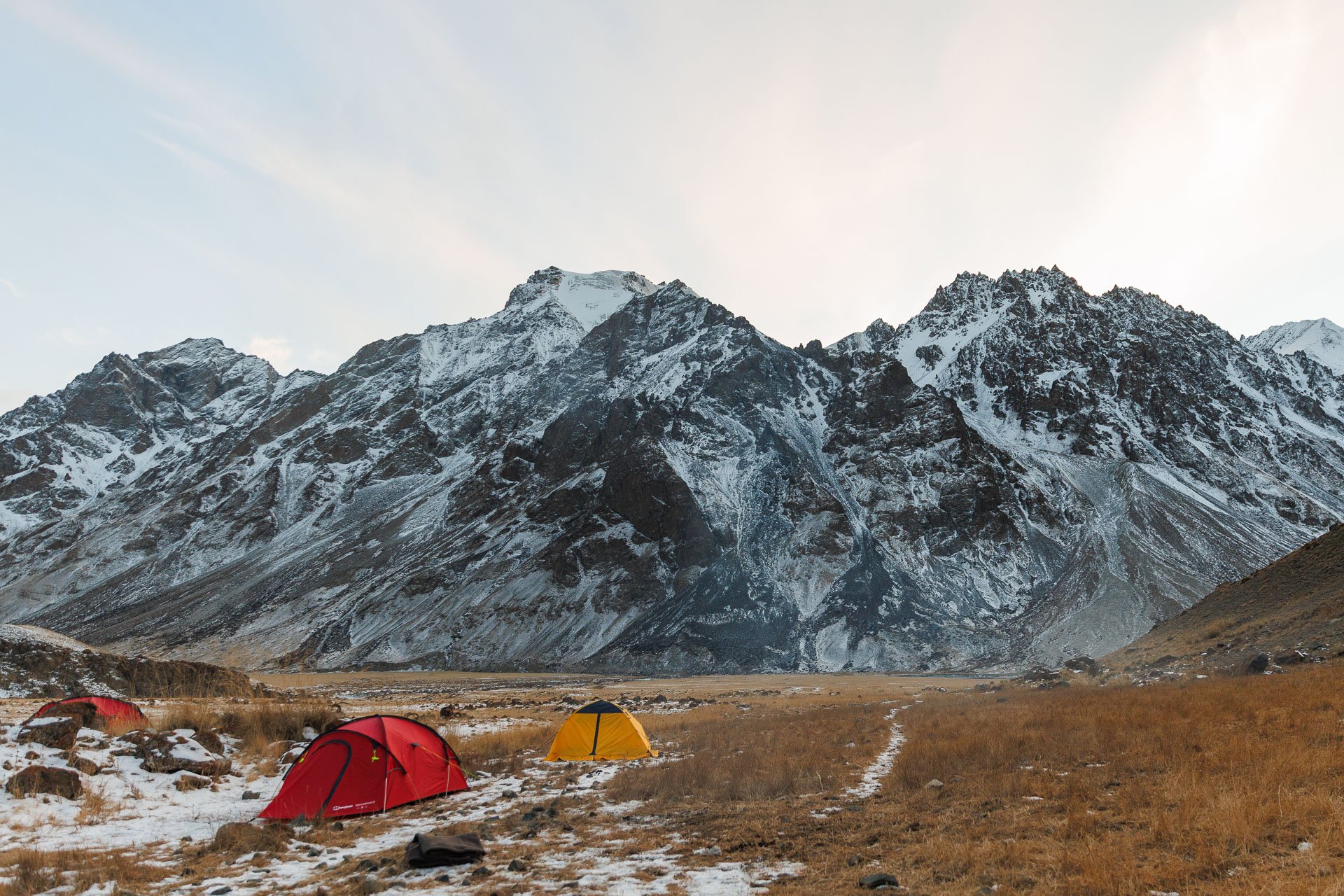
You’ll be sleeping in tents with access to a communal heated yurt where we’ll dine and relax in the evenings.
Days 04 - 07
Field Operations & Scientific Activities
To maintain flexibility around mountain weather and physical terrain barriers, our four days of core fieldwork remain fluid. The cohort splits into two highly focused, 5-person field teams.
The Daily Mission: Teams hike, ride or drive to precise target zones to install the area’s first scientifically placed camera trap systems to strict spatial and structural protocols. Expect long days moving gear on foot and horseback over steep slopes.
Opportunistic Data: Collect predator signs and run prey abundance counts along the deployment routes if time and terrain allow.
Evening Verification ( If applicable ) : Review physical data sheets, format GPS logs, and verify deployment coordinates in camp to ensure a clean data handoff and longterm data validity.
Enjoy off grid life: No phone connections here, become totally immersed in a true wildness.
Day 08
The Descent
We’ll say farewell to our local ranger team who have welcomed you to their home and shown you all that the mountains have to offer. After breaking camp, we’ll begin the drive out of the high mountains.
After retracing our inward journey, we’ll arrive in a sleepy town along the shores of Lake Issyk-Kul. Here we’ll have time to evaluate our data and log our final data points. We will spend the night in a comfortable hotel in the foothills, enjoying our first hot showers of the expedition.
Day 09
The Eagle Hunters & Departures
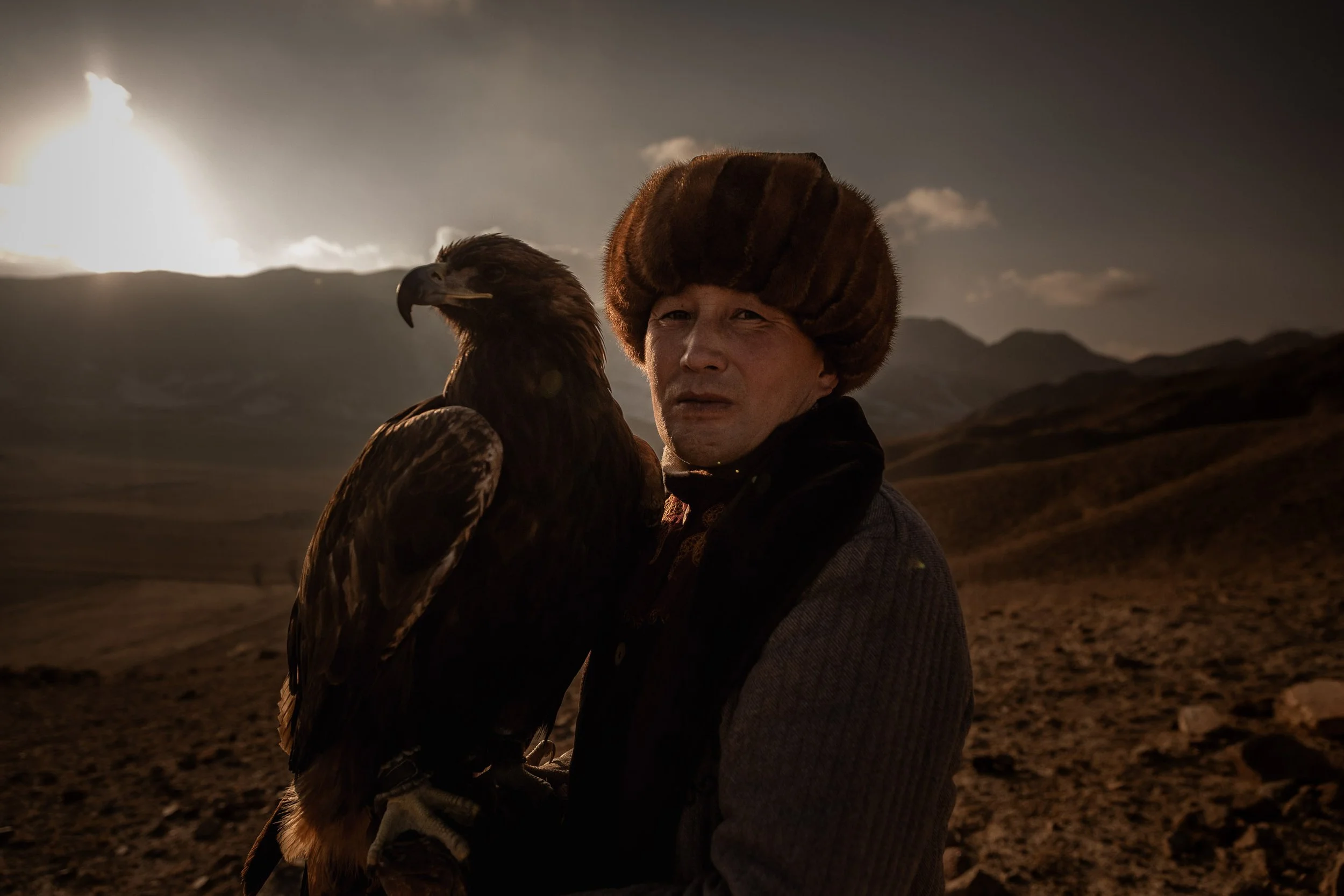
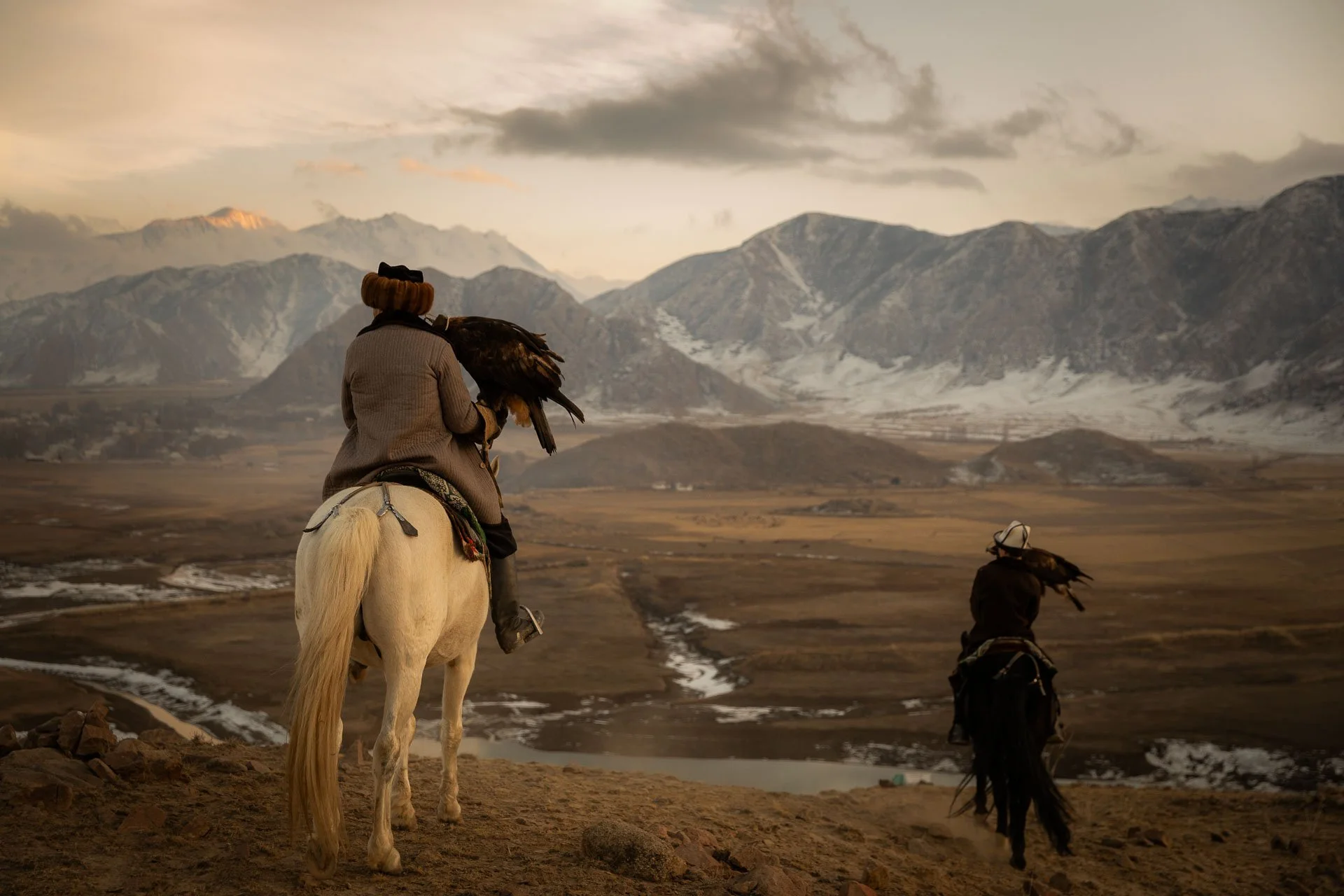
On our final day of the expedition we will stop for a private demonstration by a traditional Kyrgyz Eagle Hunter, exploring the complex, historic relationship between nomadic communities and apex avian predators.
Following which we will return to Bishkek where you will have a night in a hotel provided (note dinner not included). You can fly anytime after 10pm, but most participants choose to fly the following day in case of delays. Airport transfers are provided.
Who Should Apply
This expedition is tailored for university students, graduates of a relevant degree, or career-switchers actively looking to enter the ecological, wildlife management, or conservation sectors. You do not need extensive previous field experience, but you must have a baseline understanding of ecological principles and the physical fitness required to hike and work in a remote mountain environment.
Post-Expedition Career Support: Upon successful completion, you will receive a Certificate of Completion detailing the specific methods you were exposed to. Our expedition leaders will also be available to act as references for your future applications.
Dates & Pricing
Enjoy a small group intensive learning experience of no more than 10 participants
£2,700 per person
2026
21st - 29th September
Applications Closed
FAQS
If you have any further questions, please contact us
-
Absolutely. Kyrgyzstan is located in the heart of Central Asia, bordered by China and Kazakhstan. It is completely insulated from conflicts in the Middle East and remains a peaceful, welcoming destination for trekkers and travellers.
For context, Iran to Kyrgyzstan is the same distance as London to Moscow.
There is no indication whatsoever that the situation in the Middle East could spill over to Central Asia. Kyrgyzstan is a very safe and stable destination.
For those concerned about flights. We encourage you to book with reputable airlines such as Turkish who route north of the Middle Eastern territories. Flights route over Europe and the Black Sea/Caucasus, staying well clear of the restricted airspace in Iran, Iraq, and the Gulf. At last check, these are currently running as normal. Other airlines include Air Astana who also fly north of the Middle East and are operating as normal.
We do not anticipate our Kyrgyzstan expeditions being cancelled. It is always important to take out insurance at the time of booking to protect yourself against cancellations, which beyond travel can also include health issues, personal changes, or missed flights.
-
Your chances of seeing a snow leopard in late summer are around 50%.
The wildlife in the Reserve are completely unhabituated and wild - this is very different to other snow leopard destinations where the wildlife has become habituated to vehicles and the presence of humans. This makes our location completely unique and special, and previous participants are always blown away by how remote and wild we actually are.
You will be an integral part of the research team, working hard to spot wildlife and track snow leopards wherever we encounter tracks as a small group. The locations you’ll travel to rarely see tourists and the wildlife you'll see are truly wild.
You should expect to view wildlife predominantly through scopes or high-powered focal lenses as sightings can easily be 1km away, likely more in the summer. You will be provided with top-end scoping equipment during the expedition and we recommend everyone brings a good pair of binoculars.
-
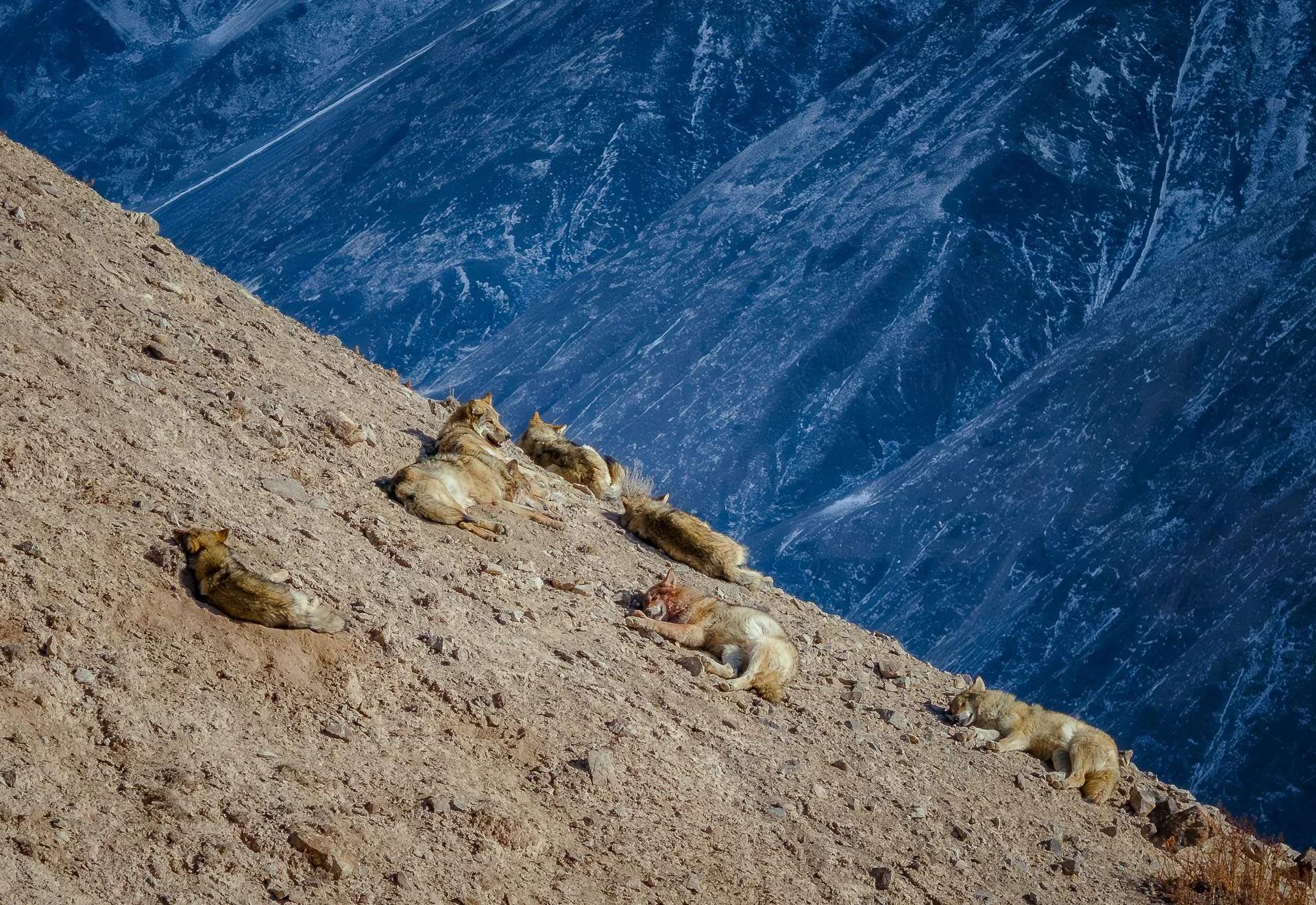
Aside from snow leopards, Kyrgyzstan is full of other fascinating wildlife. You’re likely to see wolves, Tian Shan brown bears, golden eagles, ibex, argali, marmots, Himalayan vultures, bearded vultures and mountain hares.
-
You don’t need to be super fit to enjoy our expeditions. You will need to be fit enough to trek for several hours at a time on uneven terrain. We will be no higher than around 3,000m so the effects of altitude are minimal. No experience of altitude is necessary and serious altitude sickness is very rare at this height. If you have any concerns, please talk to us.
As this expedition is extremely remote, we are unable to accommodate people with existing conditions requiring regular medical attention.
-
Yes. Many universities offer travel grants, career development stipends, or research bursaries for undergraduate and postgraduate students undertaking field training. Once you apply and are accepted, we can provide you with the relevant documentation.
-
Possibly. As this is an intensive 9-day instructional practicum rather than a prolonged research study, the volume of data collected is limited. However, if you are looking to focus a thesis on alpine survey methodologies, human-wildlife conflict dynamics, or eco-tourism structures in Central Asia, please contact us prior to booking to discuss how we can tailor your focus.
-
Your health and safety are our top priorities. Because we operate in true wilderness environments, we have rigorous, regularly reviewed protocols in place:
Expert Leadership: You will be guided by a highly trained Expedition Leader who is responsible for your safety and well-being.
Medical Equipment & Comms: We carry a comprehensive medical kit and an emergency satellite communication device at all times.
Remote Medical Support: We have dedicated remote access to a British medical doctor throughout the entire expedition.
Evacuation Plans: For extreme emergencies, we have pre-specified landing sites for helicopter medical evacuation (this is why your required travel insurance must cover air evacuation).
It is essential you have appropriate travel insurance in place covering you for all planned activities as well. as helicopter evacuation.
-
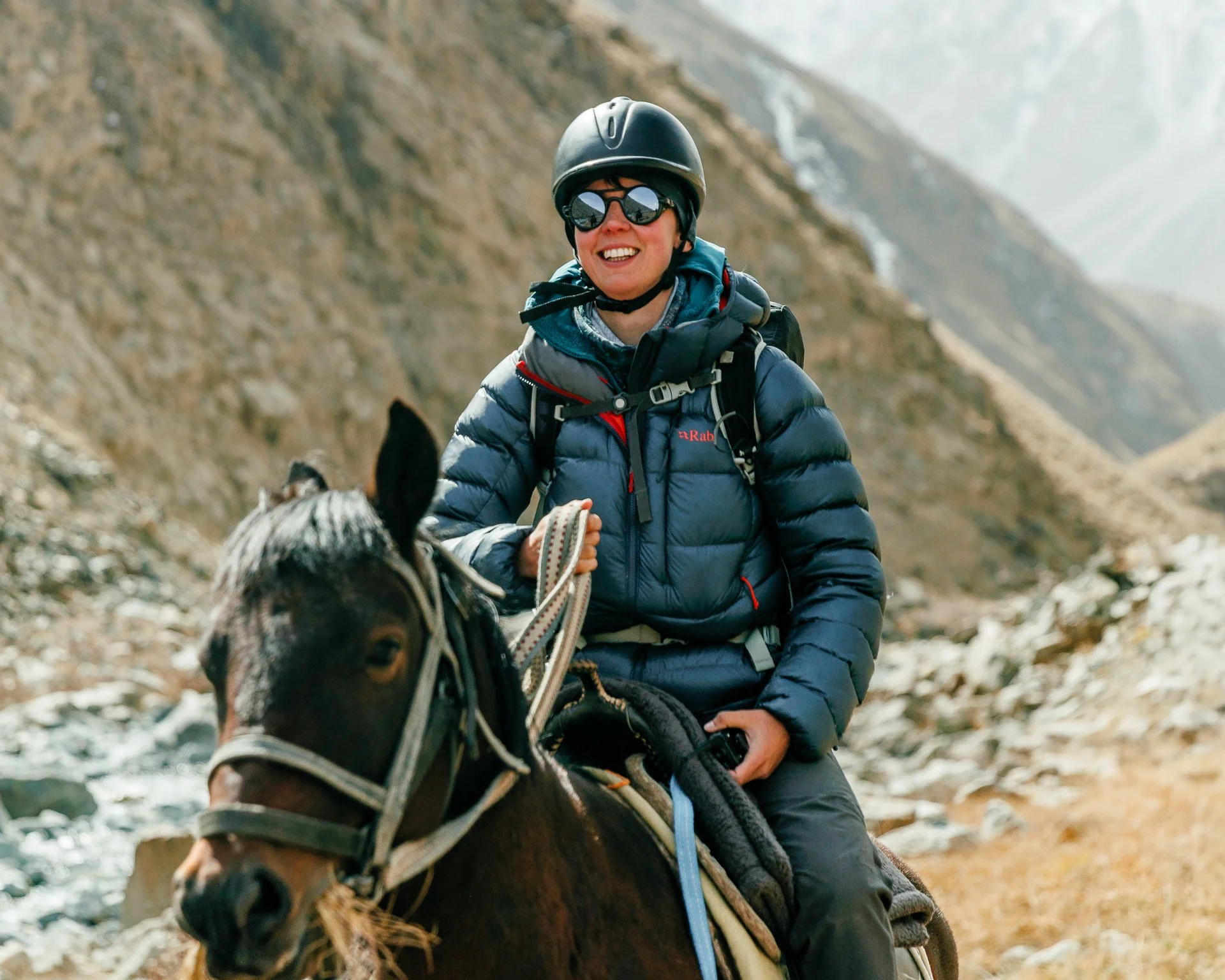
You don’t need any horse riding experience, but you will need to be able to get on and off a horse.
We will have enough horses for half the group to ride each day. Therefore some days you will be on foot or with the 4×4.
No matter your experience riding horses, we do not allow for riding at speed (cantering or galloping). This is for the safety of participants and the welfare of the horses. You will be provided with a riding helmet meeting VG1 01.040 (2014-12) standards for the duration of the expedition, which must be worn.
In order for us to meet our obligations under our company insurance, you will also be required to sign a helmet disclaimer form. This is required by all participants and will be sent to you before the expedition begins.
-
Room bookings will be made on a twin or triple share basis depending on the makeup of the final group. This will apply to accommodation outside of our research location.
At our base camp, you will have your own tent for the duration of the expedition-phase.
-
Our campsite is basic, but comfortable. You will sleep in winter-grade tents but have access to a shared heated yurt throughout the day and evening. Our site has no running water, but there will be a handwashing station to maintain hand hygiene at our base camp, along with a simple dry toilet. A dunk in an alpine stream towards the end of the expedition is a wonderful way to freshen up.
In September, we would expect to be in fairly warm weather during the day, although we could experience downpours unexpectedly. During the evening and throughout the night, temperatures can easily fall below freezing, so it is important to come equipped for cold nights. Take a look at our kit list here for more specifics.
-
All water that we consume will be purified by one of three means: boiling, chlorine tablets or water purifying pumps and is therefore safe to consume.
-
Food will be provided by local chefs for the duration of the expedition. They will cook a mixture of delicious Kyrgyz, Central Asian, and Western dishes. Veggies and vegans catered for, however, meat is an essential part of Central Asian cuisine. If you are a flexible veggie or vegan, we recommend you take this approach to make the most of the food on offer. Vegans in particular can expect a lack of variety on the expedition itself, but also in major cities and towns.
Nonetheless, whatever your preferences, you’ll be well fed!
-
You will be offline for the majority of the expedition. You will have wifi in your hotel in Bishkek, but it may be slow. SIM cards can be easily purchased at the airport. This will provide some connection on the way to the Reserve, but in the Reserve you will not be able to get signal.
We will hold an emergency communication device for the duration of the expedition. This is strictly for emergency use only.
-
You should arrive in Bishkek on Day 01. You are free to arrive anytime and an airport transfer will be arranged for you. You will be able to check into your hotel by around 2pm. Early check-ins and additional nights will be at your expense and arranged directly with the hotel.
You can depart anytime after 10pm on the last day of the expedition (Day 09). However, a single night in a hotel is provided for you in Bishkek, so most people will fly the following morning in case of delays. An airport transfer will be provided for you to the airport.
-
Kyrgyzstan is visa-free for most passports. However, you must check the requirements yourself before departure for your specific nationality.
Please ensure you also check vaccination information carefully before departure as these can be subject to change.
-
You are required to have travel insurance covering you for the duration of the expedition and for all the activities you will be undertaking. This includes horse trekking and trekking/hiking up to 4,000m, as well as helicopter medical evacuation. You will be asked to provide your insurance information closer to departure.
We strongly recommend that you take out cancellation and curtailment insurance as part of your cover as soon as you have booked one of our expeditions to protect against cancellations.
Previous guests have noted IMG Global, World Nomad, BMC and Endsleigh as providing sufficient cover.
-
While same-sex relationships are technically legal in Kyrgyzstan, the country remains highly socially conservative, and LGBTQ+ identities are heavily stigmatised. Public displays of affection are generally frowned upon for all couples, but we strongly advise LGBTQ+ travellers to exercise a high degree of discretion regarding their sexual orientation and gender identity while in the country.
Because our expeditions take you deep into isolated regions to live and work alongside traditional nomadic communities and local park rangers, the cultural environment you will experience is more traditional. Wild Expeditions is a welcoming, fully inclusive company, and our Expedition Leaders will always prioritise your safety, comfort, and well-being above all else.
We are always happy to have a confidential chat if you'd like to discuss this further before booking.
-
You can take a look at the full expedition kit list here.
We’re always happy to provide further advice and recommendations.
-
We have included some guidance on what photography equipment you might want to bring on our kit list. You can find that here.
You're free to bring a drone on our expedition, however, we do have strict controls on flying drones near wildlife.
We do not permit participants to fly drones near wildlife, including both predators and prey. You are free to fly drones for landscape photography purposes but note take off must be approved by the Expedition Leader.
-
Tips for local staff are completely at your discretion. All our staff are paid fairly for their work. Tips are welcomed in either Kyrgyz SOM or USD, with a preference for SOM.
Giving tips at the end of your trip is a wonderful way of showing your gratitude for their hard work. If you plan to give tips, we can provide guidance on this, just get in touch.